
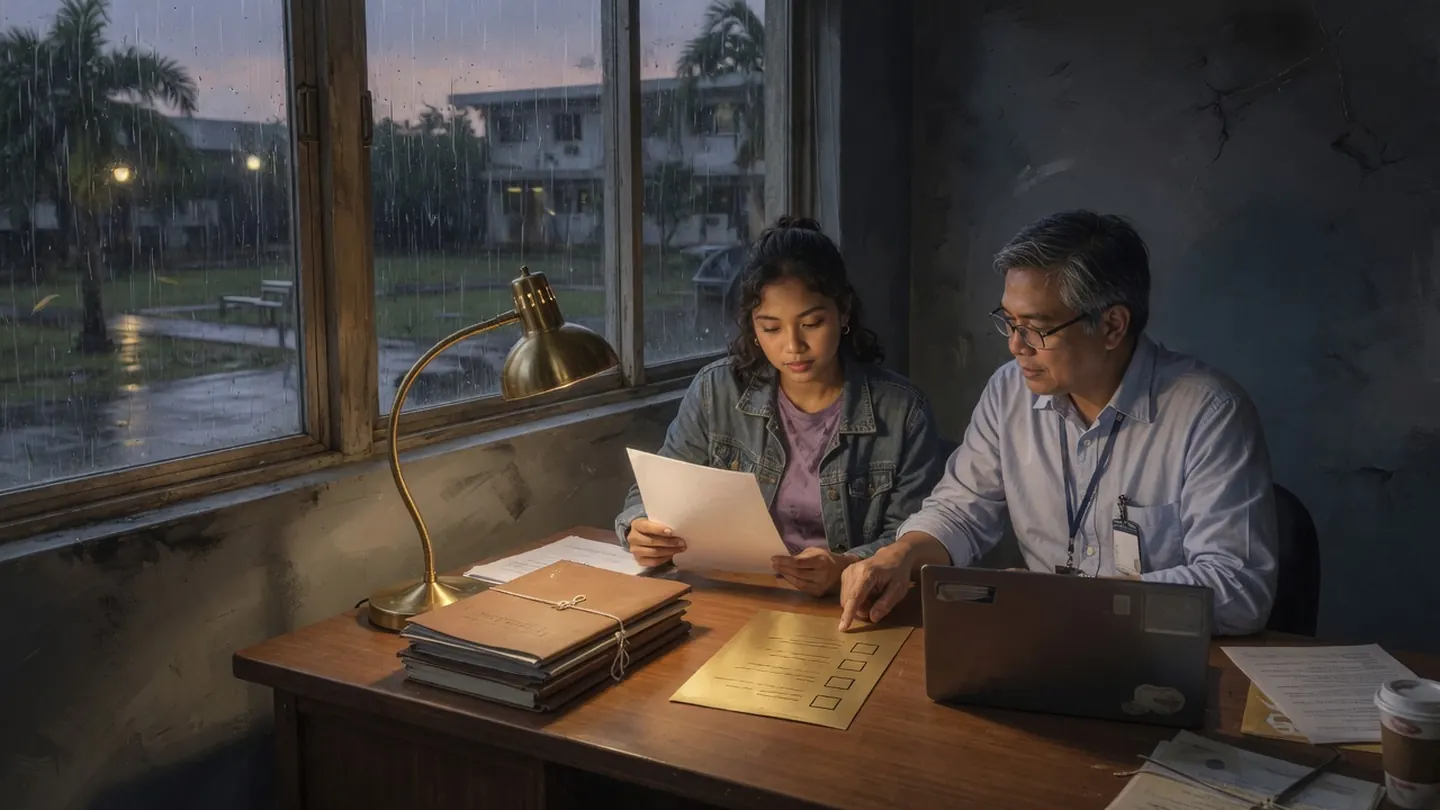
What CHED issued
The Commission on Higher Education adopted Memorandum Order No. 21, series of 2026, on 21 July 2026. Commission en Banc Resolution No. 503-2026 carries the same date. Chairperson Shirley C. Agrupis signed it in Quezon City.
The subject is a framework for artificial intelligence in higher education. It covers teaching, learning, research, administration, student services and governance.
It applies to public and private higher education institutions under CHED. It does not cover basic education. Public schools under DepEd follow separate rules.
The order says it does not require AI in every program or class. Faculty and the school still decide where AI fits.
Five rules to know
Disclosure is required. The school defines the form and the process. CHED says it will offer model templates that a school may adapt.
Theses and dissertations must disclose AI use. The school still sets that format.
Where a school uses an AI detector, that result cannot be the only basis for a finding of academic misconduct. CHED also says it does not require a detector on every submission.
No AI system should decide an academic outcome on its own without meaningful human review. For high-impact uses, including grading, admissions, scholarships and student progress, the order requires a person in the final decision.
Confidential or sensitive material must not be uploaded to an unsecure public AI platform. That includes student records and research files.
What your school still decides
The order leaves the local policy to the institution. Syllabi should say when AI is allowed, when it is limited, and how students disclose it.
A school that uses high-risk systems must set an internal governance path. The order’s examples include grading, admissions screening, faculty evaluation, proctoring and scholarship eligibility.
CHED says it does not require one identical structure for every campus, a detector on every paper, or a mandatory AI regulatory center in each school.
When this starts
The default transition is 12 months. A school may extend that to 18 or 24 months when readiness, resources or local constraints call for a slower phase-in.
The order takes effect 15 days after publication in an official publication or a newspaper of general circulation, and filing with the administrative registry. The signed text does not print that publication date.
Until your college posts its own rule, ask before you treat a national form as already in use.
What to do next
- Ask your college for its AI disclosure rule before the next paper, thesis or project.
- If a detector is the only evidence in a misconduct case, ask for the human review the order describes.
- Keep grades, medical files and unpublished research off public chat tools.
- Faculty can put allowed and restricted AI use in the syllabus, in words students can follow.
- Watch your school’s own clock. The default is 12 months, and the school may take longer.
 Try itPrepare thesis defense questions and brainstorm research titles
How this was checked
The rules above are from the 10-page order opened on 23 September 2026 at the government file link. The file carries an official-release stamp from the CHED records section and the 21 July 2026 signature. A retrieval of CHED’s public 2026 memorandum-order page the same day listed Nos. 1, 2, 4 and 5. No. 21 was not on that list. The live page did not open past a security check in this session, so the order file above is the text to use. A Philippine News Agency link also did not open, so it is not used for the wording.
Put this into practice
College students can use AI to prepare, and should check every claim before it goes into their work.

Sources & further reading
Source note. The linked sources support the news in this article. The explanations and suggested next steps are from Pinoy AI Works.