
Everyday AI · Research
Check a claim against its original source
Did an AI answer give you a claim that you need to verify?
Listen to this guide
AI narration · English · Prompt text stays on the page
Try ElevenLabs ↗ · Affiliate link
What you will make
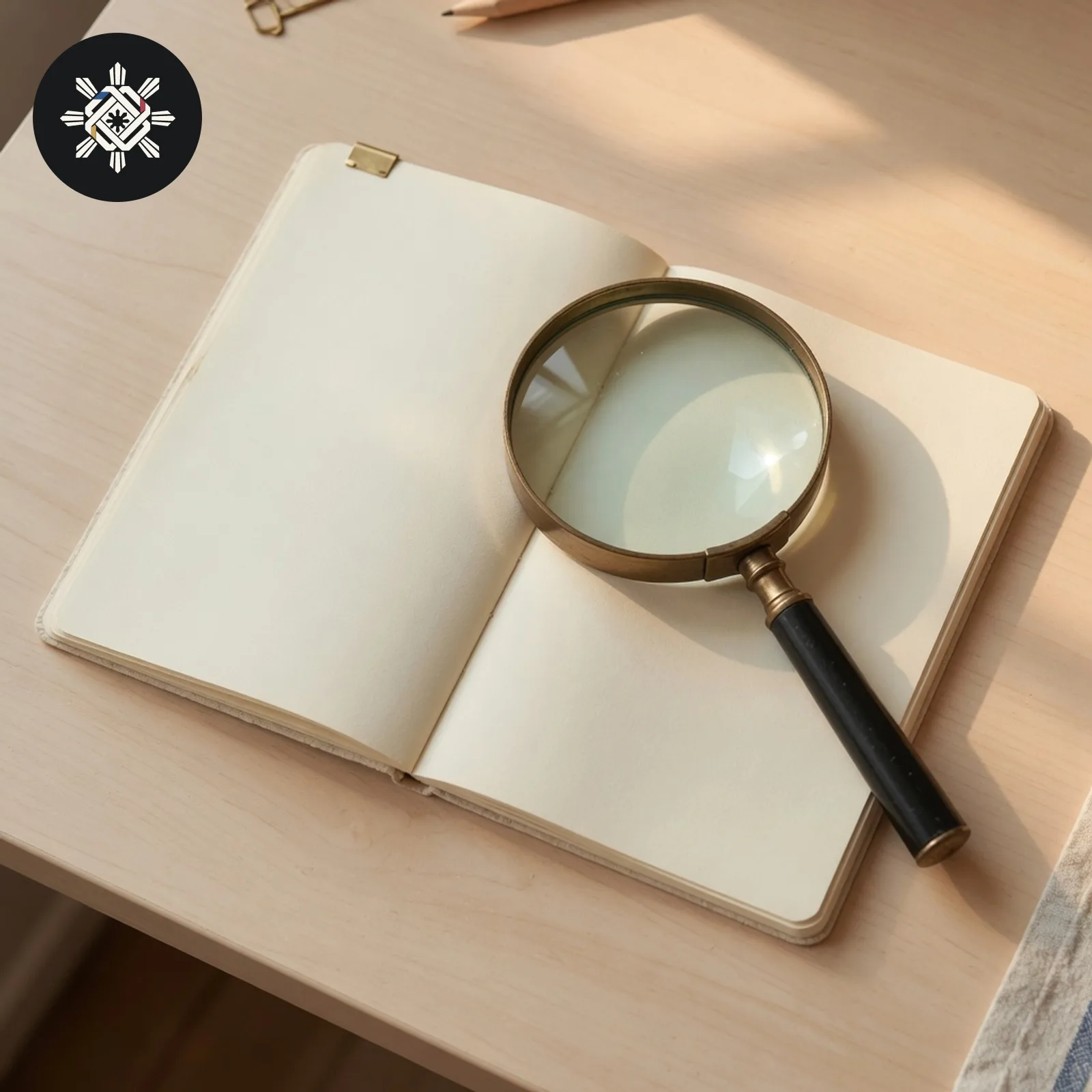
A claim marked either verified or not verified, with the exact source passage you checked yourself.
What you need
The claim you want to check, and access to the source it came from — a webpage, document, article or citation.
Before you start
Copy the claim exactly, including any name, number and date. Do not accept a citation you have not opened and read yourself.
What to do
- Copy the exact claim, including any name, number and date.
- Ask for the original source, then open that source yourself. Do not rely on a citation that you have not opened.
- Find the sentence, table or page that supports the claim. Check whether it refers to the same place and time.
- If the source does not support the claim, mark it as unverified and do not repeat it as fact.
Try this prompt
Paste the claim and the relevant source text directly into the prompt below — the AI cannot fetch a live link on its own.
Check whether this claim is supported by the original source I provide. Do not use outside memory to fill gaps unless I explicitly ask for additional research.

CLAIM
[PASTE THE EXACT CLAIM]

ORIGINAL SOURCE
[PASTE RELEVANT SOURCE TEXT OR PROVIDE THE SOURCE]
Source title/issuer: [FACT / TO CONFIRM]
Source date/version: [FACT / TO CONFIRM]

METHOD
1. Break the claim into checkable parts.
2. For each part, find the exact supporting/contradicting source passage.
3. Classify each part as:
   - Supported
   - Partly supported
   - Not supported by this source
   - Contradicted by this source
   - Cannot determine from supplied source
4. Explain important differences in numbers, dates, scope, population, conditions or wording.
5. Distinguish what the source says from your interpretation.

RULES
- Do not treat absence from the source as proof the claim is false; use “Not supported by this source.”
- Do not strengthen cautious source wording such as “may,” “associated,” “estimated,” or “up to.”
- Do not quote or cite passages that are not actually in the supplied source.
- If the source is incomplete, excerpted, outdated or secondary, state that limitation.
- Do not judge the source’s overall credibility unless I ask separately.

OUTPUT
A table: claim part | verdict | source evidence | explanation | limitation.

Finish with a one-paragraph fidelity summary that stays strictly within what this source can establish.See a sample result
Illustrative example. Your answer may differ.
Claim: Registration guarantees entry. Source: Registration is subject to confirmation. Result: Not verified. The source says the organizer must still confirm entry.
Before you use it: Open the original source and confirm the quoted passage yourself.
Try this follow-up
Show me the exact sentence in the source that supports or contradicts this. Then tell me what is still uncertain.
If the answer is not right
If the AI cannot open the link or the source is paywalled or unavailable, paste the relevant passage yourself before asking it to check the claim.
More everyday guides
 Did you find an event on YouTube, X or Facebook?
 Do two articles, reports or videos appear to say different things?
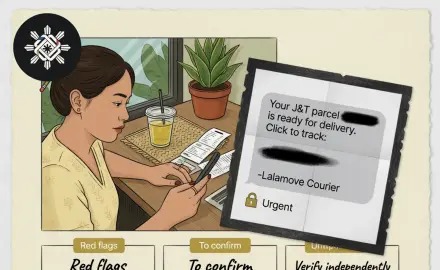 Did you get a courier or SMS message that asks for a fee, a click, or personal details and want a careful red-flag check?
 Did you see a poster or a chat invite and want to check it before you travel, pay, or register?