What happened
The Maritime Industry Authority, MARINA, held a research forum on Monday, 9 November 2026.
The Philippine News Agency reported it on 10 November, from a MARINA statement issued that Tuesday.
The forum presented four studies that MARINA had approved.
Two of them cover autonomous ships and simulator training.
The other two cover jobs for Senior High School maritime graduates, and a topic the statement calls “Green AI” for the maritime workforce.
The statement names those two topics. It does not describe their findings.
MARINA said each presentation was followed by an open forum.
Officials of the Standards of Training, Certification and Watchkeeping Office, the STCW Office, also spoke.
The autonomous-ship study
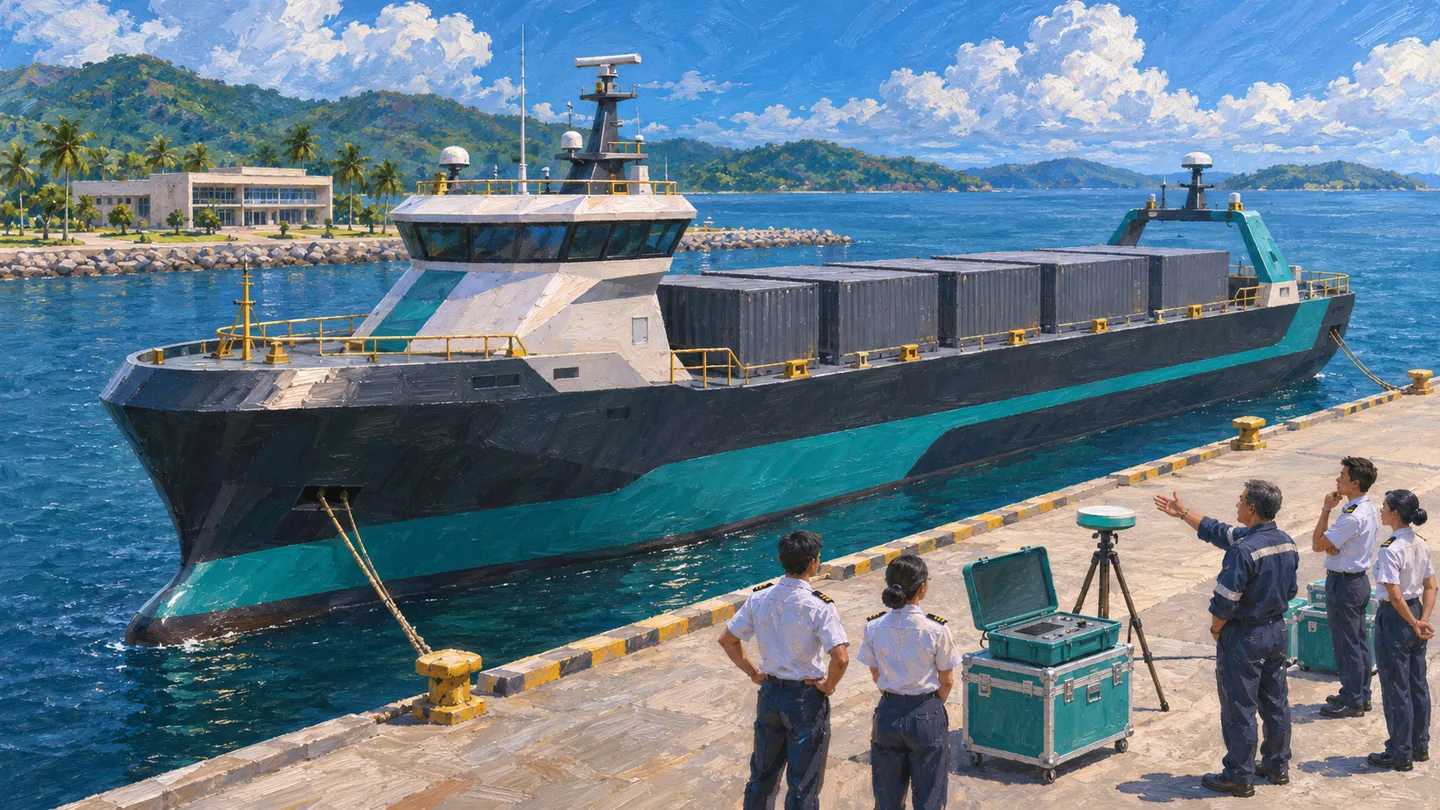
MARINA called this study a preliminary impact assessment.
It asks what skills Filipino seafarers will need to operate maritime autonomous surface ships.
The statement does not list those skills.
It does not say when such ships would reach crews from the Philippines.
An early assessment is not a training course you can enroll in.
Simulator hours and sea time
Sea time is the service a seafarer must complete at sea before a certificate.
The second study asks whether hours in a simulator can partly replace that sea time.
MARINA said it is examining the question.
It did not say that simulator hours already count.
The statement gives no hour count, no approved simulator and no start date.
What officials asked for
Presca Lugo supervises maritime education and training standards at the STCW Office.
She urged stakeholders to turn the findings into practical changes in policy, programs and training.
Samuel Batalla, executive director of the STCW Office, said the research matters when findings become action that improves the sector.
Those lines are a call to use the studies. They are not a circular.
MARINA said the forum was meant to support evidence-based decisions, and to help stakeholders work together.
The statement does not announce a new rule, a program or a timeline.
Why it matters in the Philippines
Filipino seafarers crew ships around the world.
A later change to skills, or to sea time, would reach their training and their certificates.
It would also reach the schools that prepare them.
This statement does not change the sea time a cadet must finish.
A training center can read the studies. It should not rewrite a course until MARINA publishes a rule.
What to do next
- Read the Philippine News Agency report, and keep the studies separate from a rule change.
- If you are in training, ask your school which sea-time rule it follows today.
- Do not pay for a course that says MARINA already counts simulator hours as sea time. This statement does not say that.
- Wait for a MARINA circular, or a named program, before you change a study plan.
- If a second article goes further, open the agency report and keep only what it states.

How this was checked
The date, the four topics, the preliminary-assessment wording and the simulator question come from the Philippine News Agency.
The remarks by Presca Lugo and Samuel Batalla come from that same article, published 10 November 2026.
This desk reopened the article on 12 November 2026.
The line that no rule, program or timeline was announced is what the statement leaves out.
The notes for cadets, schools and families are this article’s reading. MARINA did not publish those steps.

Put this into practice
A notice like this is easy to over-read. These guides show how to keep only what a source says, and how to compare a second article without mixing the two.

Sources & further reading
Source note. The linked sources support the news in this article. The explanations and suggested next steps are from Pinoy AI Works.