Why creative discovery is fragmented
Creative work has never been easier to publish, yet finding the right creative capability for a particular project can still be difficult.
A person’s professional identity may be spread across a portfolio, LinkedIn, Instagram, Vimeo and other platforms. Their contacts and reputation may exist somewhere else entirely.
Brands and studios can end up making creative decisions from fragments: a job title, CV, portfolio, follower count, recommendation or list of software skills.
For UNVRS, that misses a more important question: is this actually the right person or studio for this project?
Natacha Moxhet, Co-Founder and CEO of UNVRS, summarizes the company’s thesis simply: “The creative economy does not have a talent problem. It has a collaboration problem.”
Creative work is contextual. Someone can be highly skilled and still be the wrong fit for a particular brief, while a lesser-known creative may have exactly the visual language, production experience or working style a project requires.
Beyond job titles: Creative Identity and Compatibility
UNVRS calls this richer representation Creative Identity.
Instead of reducing someone to a label such as director, editor, designer or AI filmmaker, Creative Identity is intended to represent a broader picture of the person: their skills, projects, disciplines and capabilities, but also their aesthetic language, references, experience, methodology, ways of working, roles within teams and the kinds of work they actually want to pursue.
Creative Compatibility takes that richer identity into the context of an individual project. The brief changes. The team changes. The creative direction changes. And the capability missing from the project changes.
Someone who is an excellent fit for one project may therefore be completely wrong for another.
That shifts creative discovery away from simply asking who has the right title, toward what this project actually needs, and whose work suggests they can provide it.
Creative Graph, Matching Engine and Felicity™
The wider UNVRS vision includes what it calls the Creative Graph, a Matching Engine, and an intelligence layer named Felicity™.
Moxhet describes the Creative Graph and Felicity relationship this way: “The Creative Graph is the memory of UNVRS. Felicity is the intelligence that turns that memory into useful decisions.”
A creative project contains far more context than a typical search query: the brief, creative direction, visual references, budget, timeline, geography, deliverables, rights, existing team, missing capabilities and previous collaborations.
The Creative Graph is designed to connect that context.
Across that context, UNVRS combines its Matching Engine with Felicity™. The Matching Engine evaluates structured signals such as capabilities, constraints, complementarity, availability, experience, historical signals, team structure and project fit. Felicity contributes to the qualitative understanding of creative language, aesthetic alignment, vision, style and context.
Together, they help identify and explain why a creator, studio or team may fit a particular project.
That distinction matters: Felicity is part of UNVRS’s matching intelligence, but it is not the entire matching system.
Moxhet describes the philosophy behind Felicity simply: “Felicity is not AI replacing creative judgement. It is AI giving creative judgement more context.”
A more connected creative ecosystem
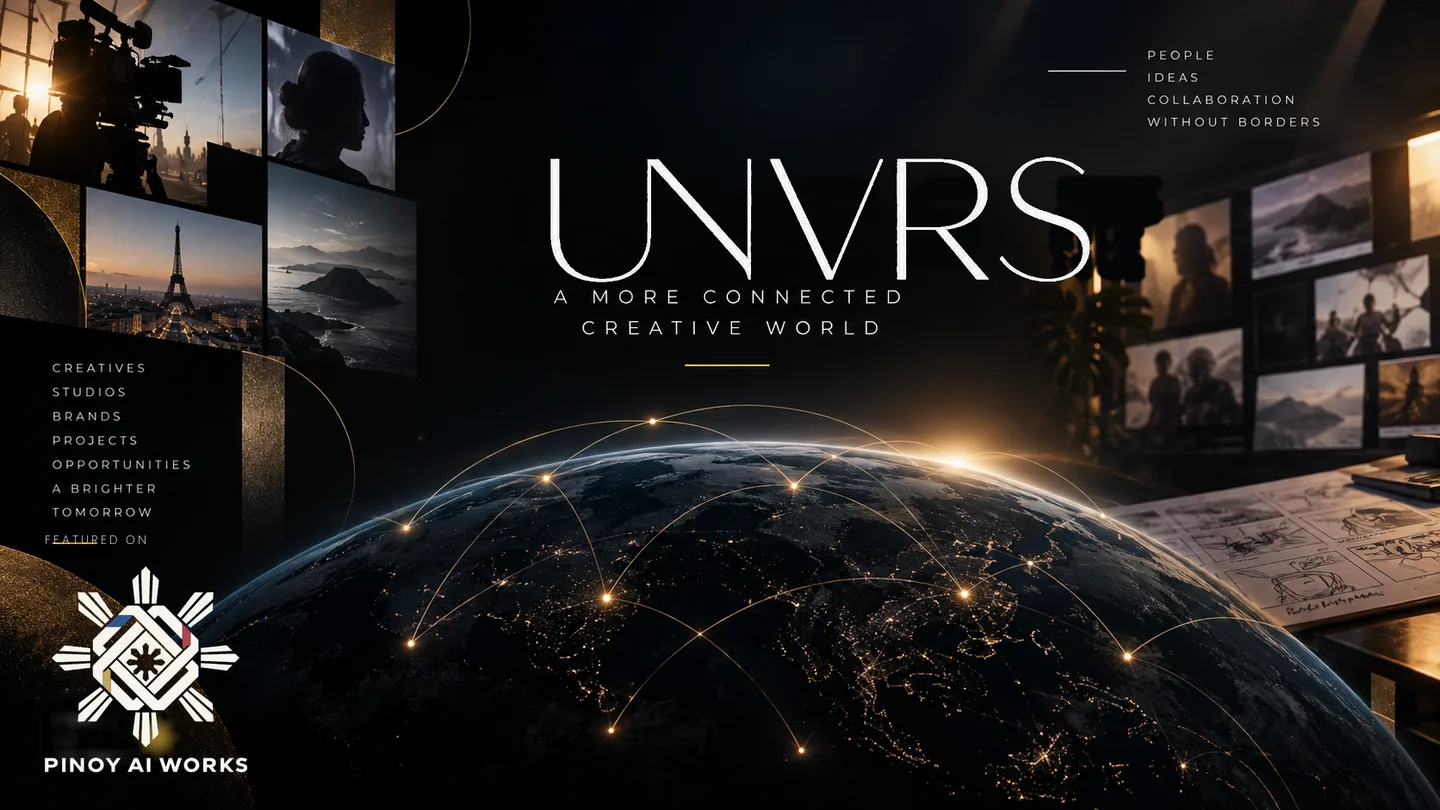
UNVRS describes its larger ambition as a Creative Operating System.
The idea extends beyond discovering someone and viewing their portfolio. Creative identity, project context, collaboration and the knowledge created through working together can become connected instead of being scattered across separate platforms and lost when a project ends.
Who worked well together? Which capabilities complemented each other? What did each person actually contribute? Which relationships might make sense to activate again?
Instead of every new project beginning from zero, UNVRS wants previous creative context to make future discovery and collaboration more informed.
The company summarizes that philosophy in two ideas: “The best talent is not always the best match. The best team is the most compatible one.” And: “The next project should not have to start from zero.”
For creatives, studios, agencies and brands working increasingly across borders and disciplines, that points toward a different model of creative discovery. Not simply who can do this job, but who fits this project, and why.
That is the problem UNVRS is setting out to solve.
How this was checked
Pinoy AI Works checked the terminology and descriptions in this article against UNVRS public materials. Direct written explanations from UNVRS leadership were used to verify the technical terms.
The check covered the distinction between the Matching Engine and Felicity™. The Matching Engine evaluates structured signals such as capabilities, constraints, complementarity, availability, experience, historical signals, team structure and project fit. Felicity™ contributes qualitative understanding around creative language, aesthetic alignment, vision, style and context. Together, they help identify and explain why a creator, studio or team may fit a project. Felicity is part of UNVRS’s matching intelligence. It is not the entire matching system.
The check also covered the scope of Creative Identity. It includes skills, projects, disciplines, capabilities, aesthetic language, references, experience, methodology, ways of working, roles within teams, and the kinds of work a person wants to pursue. It is not only roles, capabilities and preferences.
UNVRS describes a broader Creative Operating System as a stated vision. This article does not treat every part of that vision as available today.

Put this into practice
If a description of a creative tool matters to your work, open the original page and check the wording yourself.

Sources & further reading
Source note. The linked sources support the news in this article. The explanations and suggested next steps are from Pinoy AI Works.