What happened
YouTube published the post on 14 October 2026.
The title is YouTube Music adds new labels for AI music.
YouTube Music is rolling out labels for songs created primarily with generative AI.
The post's example is a generative model that creates the composition and the vocals.
The same post says the labels will also reach the main YouTube app.
It gives no date for that app.
It names no country and no region.
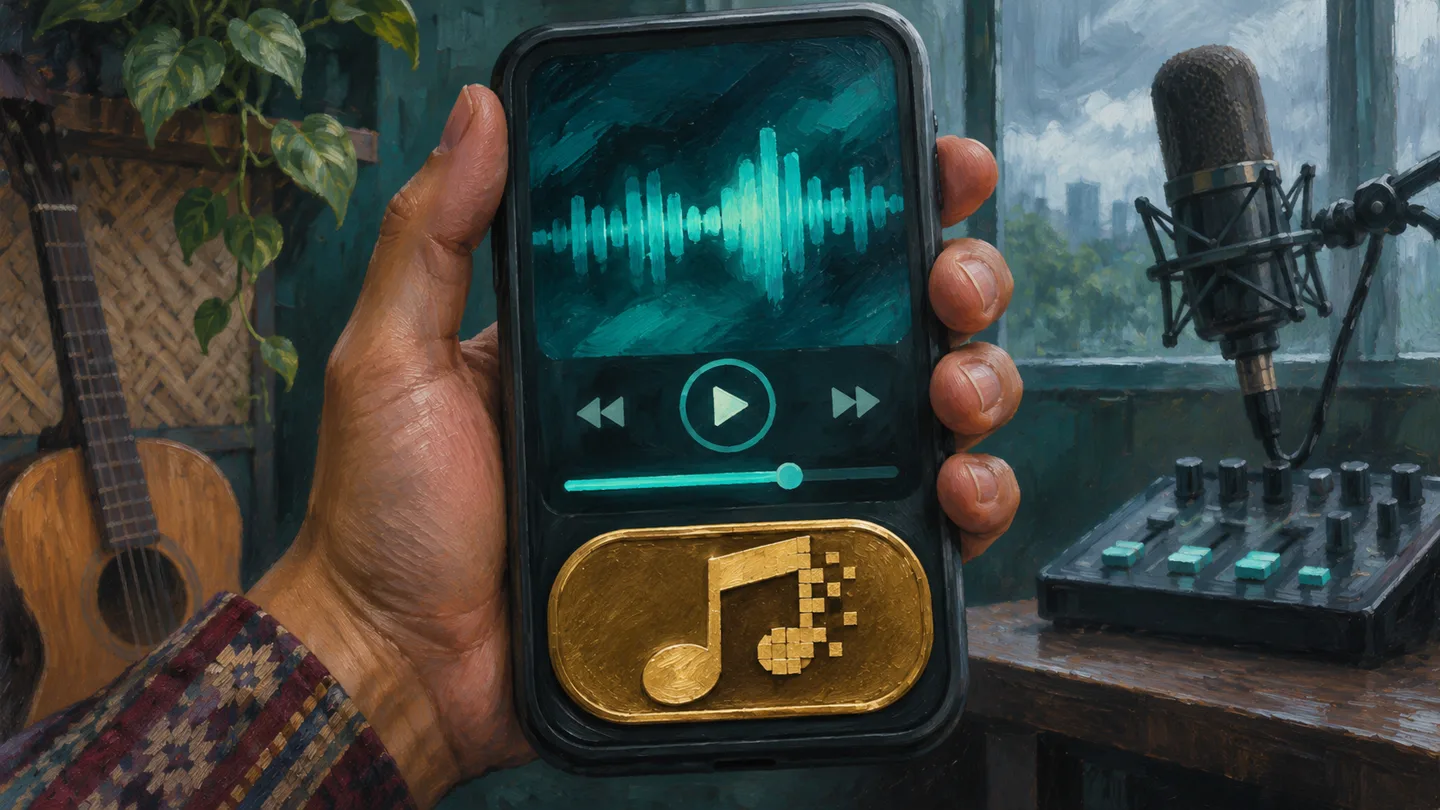
On YouTube Music, a track where AI played a significant role shows a label on the player page.
Tapping the label opens a menu with more information.
YouTube says it is working with music partners and using its own detection tools.
It says the labels follow principles already used across YouTube.
What partners declare
The post links to a help page about how a video was made.
That page points music partners to a second article on disclosing generative AI in music.
The music article is written for music partners.
It does not say that every person who uploads a song must file a declaration.
A partner can mark a track Fully Gen AI, Partly Gen AI, or No Gen AI.
Fully Gen AI means all of the content was created with generative AI.
Partly Gen AI means part of the content was created with generative AI.
No Gen AI means none of the content was created with generative AI.
If the partner sends no value, YouTube treats the track as unknown unless other signals support a call.
A note on the same page says YouTube may use extra signals.
Those signals may mark an undeclared track as fully or partly generative AI.
Partners can send the mark with DDEX ERN 4.3.2 or later.
They can also use a spreadsheet template, which the page calls CSV, or the attribute section in YouTube Studio.
The page says partners interpret the DDEX definitions for their own tracks.
How the help page sorts examples
The help page offers examples. It calls them suggestions for common cases.
A full example is a track downloaded from a text prompt in an AI music generator.
Another full example is a song whose composition, instruments and vocals all come from a generative model.
A partial example is a generated bass line or string part under live vocals and instruments.
Another is lyrics or a melody drafted with a generative tool, then recorded in a studio.
A recording made entirely by people can still be partial if the music video was made with a text-to-video model.
The page puts ordinary pitch correction, such as Auto-Tune for small tuning mistakes, under No Gen AI.
It also puts automated mastering that sets equalization, compression and balance under No Gen AI.
Why it matters in the Philippines
This section is this desk's reading of the post and the music help page.
The post does not say the labels are live in the Philippines.
A Filipino musician who releases an AI-assisted track through a distributor may see a label if that track plays on YouTube Music.
The help page speaks to music partners, not to every hobby upload.
Ask the distributor which of the three marks it will file.
A listener can look on the YouTube Music player. The main app still has no date.
What to do next
- Open the 14 October post and the music help page as two sources.
- If a distributor delivers your music, ask whether the mark will be Fully, Partly or No Gen AI.
- On YouTube Music, open a track you know and look for a label on the player page.
- Do not assume the main YouTube app already shows that label.
- Neither page states a monetization rule. Do not read the label as a decision about pay.
How this was checked
On 5 November 2026 the post and both help pages were opened again.
The player facts come from YouTube's post dated 14 October 2026.
The three marks, the blank-track note and the examples come from the music-partner help page.
The post's help link is the page about how content was made. That page points to the music article.
No region, main-app date or pay rule was added from outside those pages.
Put this into practice
The player post and the partner help page cover different facts. These guides show how to read them apart.
Sources & further reading
Source note. The linked sources support the news in this article. The explanations and suggested next steps are from Pinoy AI Works.