What happened
On 12 October 2026, the Bankers Association of the Philippines (BMAP) opened Scam Ready ASEAN in the Philippines.
The launch was held at the Bangko Sentral ng Pilipinas (BSP) head office in Manila.
BMAP ran it with the ASEAN Foundation and Google.org, in collaboration with BSP.
BMAP also launched an industry-wide campaign called “Ang Mahal ma-Scam, i-scamcheck.ph Mo Muna.”
Its message is simple: check first before you click a link, reply, send money or share personal details.
The campaign points people to ScamCheck.ph, a free checker.
Rappler reported on 13 October that the checker began with Metrobank and BetterGov.ph in late 2025, before BMAP widened it.
How to check a message
Open scamcheck.ph and paste the suspicious message. The box takes up to 12,000 characters.
You can upload one screenshot instead: PNG, JPEG or WebP, up to 5 MiB, three per minute.
For a suspicious email, forward it to check@scamcheck.ph. The site says replies usually arrive within a few minutes.
The site can be read in Taglish, Tagalog or Bisaya. Daily limits apply.
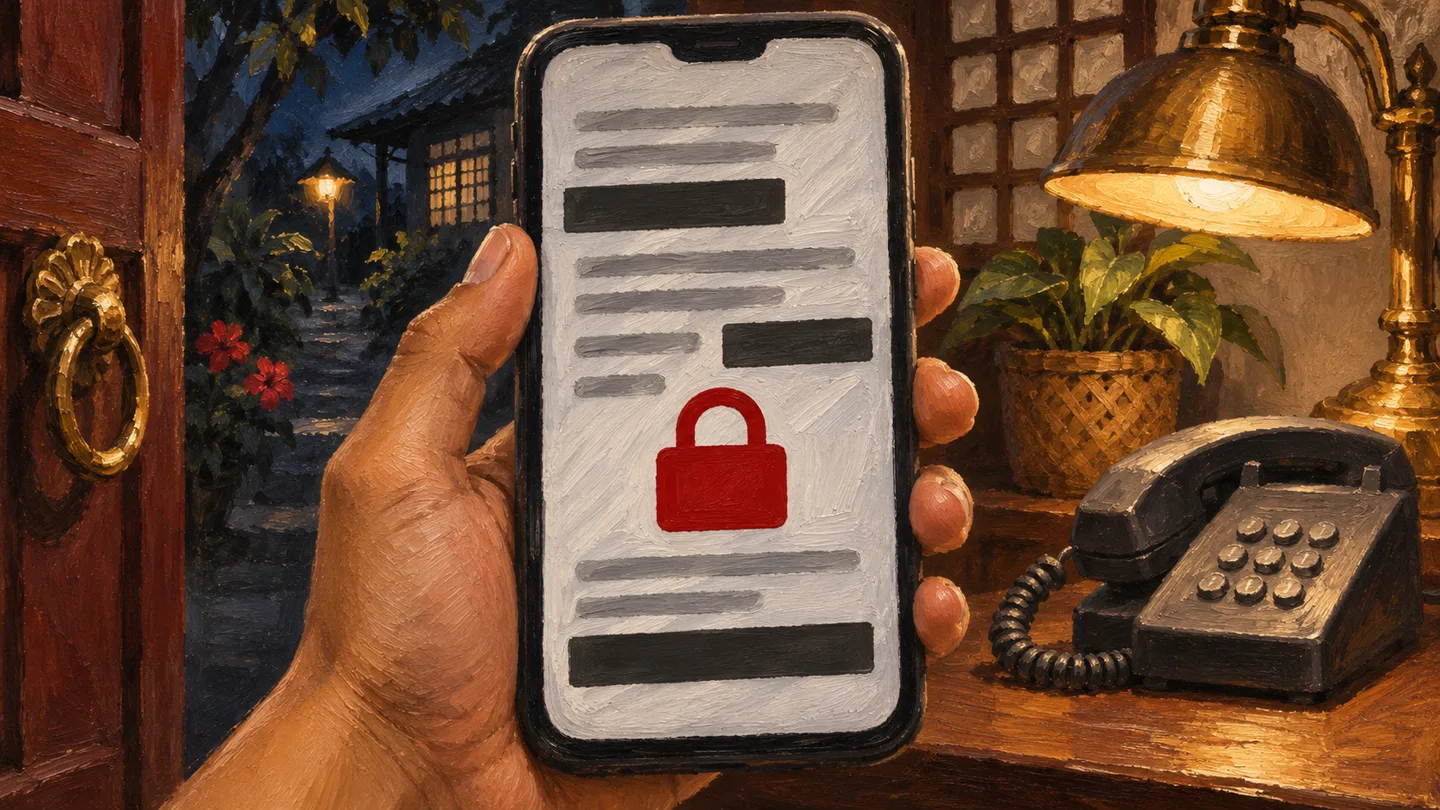
Before you submit, hide names, account numbers, passwords and one-time PINs (OTPs).
The site says submitted text and images are processed by AI providers, and that ScamCheck does not save your uploads.
Then check the claim yourself through the bank’s or agency’s official app, website or hotline. Do not use a number or link from the suspicious message.
Why it matters in the Philippines
Scam Ready ASEAN says its focus includes scams powered by AI.
The programme is funded by Google.org with USD 5 million. It first launched in Kuala Lumpur on 28 April 2026.
It trains Master Trainers and includes a game called Be Scam Ready.
GMA News reported 105 initial Philippine master trainers, mostly from banks, with 10 hours of training.
BMAP aims to reach 1 million people, including young people, seniors, fishers, farmers and overseas Filipinos. That is a target, not a count.
BSP Deputy Governor Bernadette Romulo-Puyat called consumer protection a shared responsibility. She also spoke about warning fatigue.
BSP Governor Eli Remolona said in a video that digital finance “must also become safer.”
If you already sent money
- Call your bank’s official hotline right away.
- Report it to the Cybercrime Investigation and Coordinating Center (CICC) at hotline 1326.
- A checker cannot recover money, so do not wait for one before you call.
What to watch next
- GMA News reported a schools rollout with the Department of Education (DepEd) and Knowledge Channel.
- A localized version of the game and the full rollout are planned for December to January.
- Watch for announcements from BMAP and from your own bank.
What this does not mean
A ScamCheck.ph result is a second opinion. It does not prove that a message is safe or that it is a scam.
BSP hosted and collaborated on the launch. That does not mean BSP built, runs or certifies ScamCheck.ph.
The 1 million Philippine reach and the 3 million regional reach are targets.
Published scam-loss totals differ between sources, so this story does not repeat them.
Put this into practice
These guides help you check a message yourself and keep private details out of AI tools.
Sources & further reading
Source note. The linked sources support the news in this article. The explanations and suggested next steps are from Pinoy AI Works.